Wines
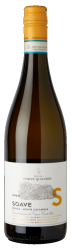
Soave - Superiore Roncà Monte Calvarina DOCG
The first wine of Tenuta Corte Giacobbe, the most important, the most complex and structured expression. The name Runcata is derived from ‘roncola’, billhook. Legend has it that our ancestors had to till the lands of Roncà to cultivate them, and they did so with the billhook, a scythe-shaped tool with a short handle. Hence the names Roncà and Runcata.
| VINIFICATION | The clusters are gently pressed, blanketed by inert gas, which protects the delicate aromas from oxidation. The free-run must then ferments at a controlled temperature (11-15°C) in large oak ovals. |
| MATURATION | Maturation takes place in oak casks at controlled temperatures, with the wine in contact with the fine lees, in order to enhance both structure and complexity. Following bottling, the wine rests in the bottle a minimum of 8 months before release. |
| SENSORY PROFILE | Gold-yellow in appearance. Generous, stylish bouquet of acacia and almond blossoms, flanked by peach, apricot, camomile, vanilla, and with an intriguing hint of sulphur, lifted by a clean vein of minerality and concluding with pungent sage and rosemary. The quintessence of its character is immediately clear upon entrance: dry and quite smooth, with a fine supportive structure, while judiciously crisp fruit provides both vibrancy and length. This is a superbly-structured wine that reaches its best only after a few years. |
| SERVING SUGGESTIONS | Pairs beautifully with elaborate dishes, even those with rich sauces; with risotto and porcinis; with white celery, squash, and almonds; cod alla vicentina; and with fish, salmon, scallops, and crab. |
| SERVING TEMPERATURE | 12-14 °C |

Tenuta Corte Giacobbe
The vineyards surrounding the ancient Corte Giacobbe are located on the slopes of two extinct volcanoes, Calvarina and Crocetta: soils generally of volcanic origin, composed of lava and tuff, rich in micro-elements.
In the estate's own vineyards, Garganega, Durella, Pinot Noir and Pinot Grigio vines are cultivated under the careful care of the Dal Cero family.
The particular geological history characteristically influences the mineral and organic constitution of the berries, determining the strong aromatic and mineral characteristics of the grapes and the pleasant sapidity of the wine.
Specifically, Corte Giacobbe's Cru wines are the fruit of vineyards grown on the volcano's summit in soil characterised by high mineral content.

Veneto
Veneto’s wines are some of Italy’s best known exports – the names of Soave, Bardolino and Valpolicella have long been associated with eminently drinkable Italian wines. Yet there is a lot more to this region, and indeed a lot more behind the names of its best known wines. With 26 DOCs and 13 DOCGs, Venice’s region has a substantial production of quality wine, as well as well-priced easy-drinking reds and whites bottled as IGTs. One of Italy’s most interesting wines is a product of these three grapes, the deep, dark Amarone della Valpolicella, recently promoted to DOCG status. Made from partly dried grapes in the vineyards north of Verona, it is a structured, complex and heady wine capable of great age that has gained a cult following among the wine industry’s elite.
In Treviso, north of Venice, are the towns of Conegliano and Valdobbiadene where the popular bubbly Prosecco is made using the Charmat method where the second fermentation takes place in large tanks.
In 2009 Prosecco di Conegliano e Valdobbiadene has become DOCG, encouraging reduced yields in the vineyards. Prosecco is also produced in the neighbouring Montello e Colli Asolani zone. White wines from Pinot Grigio, Sauvignon and Chardonnay are gaining in popularity and recent versions are responding well to oak ageing.