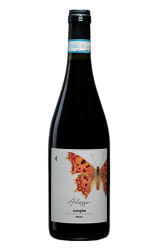
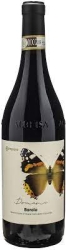
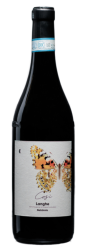
Wines
Bianco - Langhe Quando doc
We only produce a white wine that combines the characteristics of two grape varieties, viognier (a French variety) that gives floral and aromatic scents and arneis (a native Piedmontese variety) that gives minerality. The vines are positioned in the parts with a northern exposure (the less valuable ones) this allows us to maintain freshness and acidity. The decision to cultivate white vines is also a business sustainability decision as we are "exploiting" parts of the hillside that would otherwise be unsuitable for red vines.
| Varieties: | 50% Arneis 50% Viognier |
| Altitude: | 200 a.s.l. |
| Soil: | Clayey-calcareous |
| Agriculture: | Organic |
| Training system: | Guyot |
| Average plant age: | 15 years |
| Harvest time depending on the vintage: | end of August/beginning of September |
| Fermentation: | with indigenous yeasts, 3 hours maceration on the skins, fermentation in steel for 30 days |
| Ageing: | 6 months in steel vats, 1 month in bottle |

Camparo
We are not a company. We are a family. It all began in the cool summer of 1980, when Mauro decided to make wine from the grapes of the few vineyards around the winery, left to him by his father. We interpret the harvest of each vintage using a few wise agricultural practices, where ancient knowledge is combined with modern knowledge. As farmers have always done, we observe climate change and respect the timing of the vineyard, we intervene every year in a different way. Our method would be nothing without soil regeneration, to recover fertility and biodiversity, which we increase by sowing green manure plants, different every year, between one row and another. In the vineyard every year we study, we improve, we look for new techniques with a lower environmental impact, which can restore what we take from nature

Piemonte
From Asti Spumante to Barolo, the wines of Piedmont are among Italy’s most prolific and best rated. The region’s pedigree is apparent in its 58 DOC and DOCG zones, and although it is only the sixth largest producer in terms of volume, it has the highest percentage of classified wines in all of Italy. No IGT wine area is identified. This westerly region that borders with Switzerland and France is influenced by the Alps and Apennines (the name Piedmont means "foot of the mountain") and its seasons are very distinctive. Hot, dry summers, cold winters, and temperate springs and autumns are common with occasional fog during harvest time.
Undoubtedly it is the red wines that lead the way in terms of quality and cellaring potential with wines made from the noble Nebbiolo grape. The DOCGs of Barolo, Barbaresco, Gattinara, Ghemme and Roero all represent the grape at its finest: they are complex, alluring wines with extraordinary depth and great ageing potential. Barolo ("king of wines and wine of kings") is made in the Langhe hills with its output of 6 million bottles a year far exceeding that of Barbaresco at less than 2.5 million.